
Mon–Fri 9am–7pm



Investment guide
Why Invest in Gold?
The honest case for holding gold — what it has historically been good at, what it is not, and the drawbacks worth understanding before you buy.


Gold is unusual among assets in that it pays you nothing. No dividend, no interest, no rent. Whatever return it delivers comes entirely from what the next buyer will pay. That sounds like an argument against owning it — and for some people it is. But it also explains why gold has kept a place in serious portfolios for a very long time, and why interest in it tends to rise when confidence in other things falls.
What gold is generally held for
It is nobody else's promise
A bond is a promise to repay. A bank balance is a claim on an institution. A share is a stake in a company that can fail. Physical gold, held in your own name, is not a claim against anyone — it does not depend on a counterparty staying solvent to retain value. For many holders that is the entire point.
It behaves differently from shares and bonds
Gold has not historically moved in lockstep with equity markets. That is what people mean when they call it a diversifier: adding something that does not rise and fall on the same drivers can reduce how sharply an overall portfolio swings. It is not a guarantee of protection in any given episode, and there have been periods where gold fell alongside everything else.
It has held purchasing power over long periods
Over long spans, gold has broadly retained its ability to buy goods and services in a way that cash has not. Currencies lose purchasing power to inflation over time; a fixed quantity of gold has no printing press behind it.
The important qualifier is long. Over shorter periods gold has spent years going nowhere, and years falling. It has not been a dependable short-term hedge against inflation, whatever is sometimes claimed for it.
Supply cannot be expanded quickly
Above-ground gold grows only by what is mined, and mining is slow, capital-intensive and geologically constrained. New supply cannot be created by decision the way currency can.
The drawbacks, stated plainly
- No income. Gold produces no yield. Money in gold is money not earning interest or dividends elsewhere.
- It can fall, and stay fallen. Gold has had long stretches of poor performance. Anyone telling you it only goes up is not being straight with you.
- There are costs. You buy above the metal price and sell at or below it. Storage and insurance cost money. Those are real drags on return.
- It is a physical object. It can be lost or stolen. That is a practical responsibility, whether you keep it at home or vault it.
Why the UK is a good place to hold it
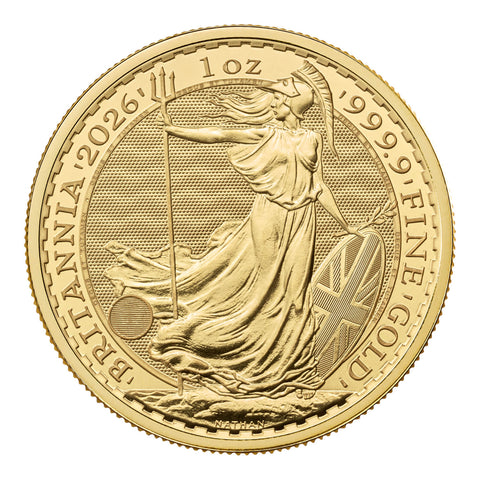
Two features of UK tax treatment make physical gold more attractive here than in many countries. Investment-grade gold is exempt from VAT, so you are not paying tax simply to acquire it. And gold coins that are UK legal tender — Britannias and Sovereigns among them — are exempt from Capital Gains Tax for UK residents, however much they appreciate.
Together those mean a UK buyer can hold gold without VAT on the way in and, with the right coins, without CGT on the way out. Tax treatment depends on your circumstances and can change, so read our tax guides and take advice where the sums are meaningful.
What gold is not
It is not a get-rich scheme, and it is not a substitute for a diversified plan. It is not risk-free — no asset is. It is not certain to appreciate, and nobody can honestly tell you what it will do next.
What it has been, historically, is a way of holding value outside the financial system, in a form that cannot be created at will. Whether that belongs in your plan, and in what proportion, depends on your circumstances, your horizon and your temperament. That is a question for you and, if the amounts are significant, a qualified adviser.
If you would like to talk through how a holding might be structured — bars against coins, tax treatment, delivery or storage — we are happy to do that without obligation.
Related products

This guide is general information, not personalised financial, investment, legal, accounting or tax advice. Tax treatment depends on your individual circumstances and may change. Please take independent advice before making a decision.
