
Mon–Fri 9am–7pm



Investment guide
How Much Gold Should You Buy?
There is no correct percentage, and anyone who gives you one without knowing your circumstances is guessing. A framework for working out your own answer.


This is the question we are asked most, and it is the one we are least able to answer for you. Any figure given without knowing your income, your obligations, your timeframe and your other assets is a guess dressed up as guidance. What we can do is set out how to reason about it.
Why there is no single right answer
Gold does different jobs for different people. For one person it is insurance against something going badly wrong elsewhere. For another it is a way of holding savings outside the banking system. For a third it is a long-term store of value to pass on. Those are not the same purpose, and they do not imply the same amount.
You will see percentages quoted freely — commentary often mentions single-digit to low-double-digit allocations as a general range. Treat those as background, not instruction. They are averages across hypothetical investors, none of whom is you.
Four questions worth answering first
What is the money for?
Gold pays no income. If you need this money to generate a return you can spend, gold is the wrong instrument. It suits capital you intend to preserve rather than capital you need to work.
When might you need it back?
Gold has had long flat and falling periods. Money you might need within a year or two should not be in it. The longer your horizon, the less any single year matters.
Do you have cash you can reach quickly?
Gold is saleable, but it is not a current account. Most people should have an accessible cash reserve in place before committing to something they would rather not sell at short notice.
How would a fall actually feel?
If a 20% drop would keep you awake or force you to sell, the position is too large for you regardless of what any percentage suggests. The right amount is one you can hold through a bad year without acting.
Two practical floors
Beyond your circumstances, two mechanics set a sensible minimum.
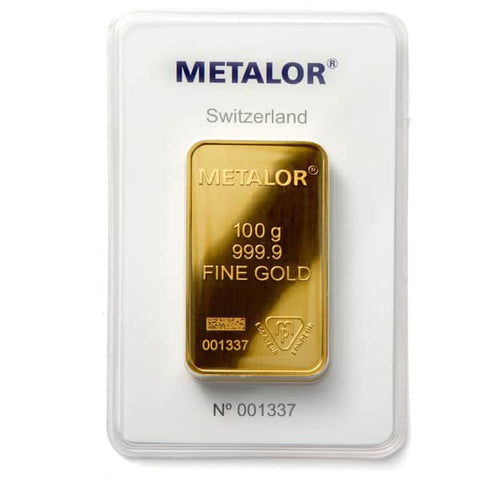
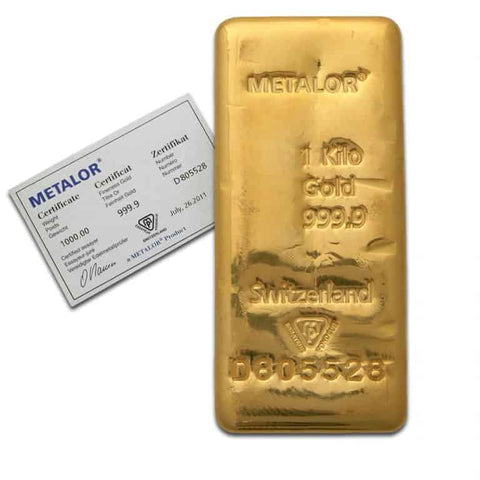
Premiums punish very small purchases. Buying in one-gram units costs substantially more per gram than buying a single larger bar. Below a certain sum, the premium is a large enough share of the outlay to be worth avoiding — it is usually better to wait and buy a more efficient unit than to buy the smallest thing available.
Storage has a floor too. Vaulted storage carries a minimum monthly charge. On a small holding, that minimum is a meaningful annual percentage. If you are starting modestly, delivery may make more sense until the holding grows.
All at once, or in stages?
Buying in instalments over months means you pay an average price rather than staking everything on one date. It will not produce the best possible outcome — that would require buying at the low — but it removes the risk of committing everything immediately before a fall, and it takes the timing decision off your shoulders.
Buying in one go means fewer transactions and can mean a better premium on a larger unit. Neither approach is right in general. Staged buying tends to suit people who would otherwise keep postponing.
Revisit it, but not often
Circumstances change and so do valuations. Reviewing once a year is sensible. Watching the price daily is not — it invites decisions driven by short-term movement in an asset held for the long term.
The honest summary
The right amount is an amount you can leave alone for years, that does not compromise your accessible savings, and that you would be comfortable holding through a poor stretch. For most people that is a minority of overall assets rather than a majority.
This is general information, not a recommendation about your situation. If the sums are significant, speak to a qualified financial adviser who can see the whole picture. We can help with the metal, the tax treatment and the storage — we are not authorised to advise you on how much of your wealth belongs in it.
Related products


This guide is general information, not personalised financial, investment, legal, accounting or tax advice. Tax treatment depends on your individual circumstances and may change. Please take independent advice before making a decision.
