
Mon–Fri 9am–7pm



Investment guide
Beginner's Guide to Buying Gold
Start here. What counts as investment gold, how pricing actually works, how to judge a dealer, and the mistakes that cost first-time buyers the most.


Buying gold for the first time is simpler than most people expect, but the language around it can be off-putting — spot, premium, spread, assay, allocated. This guide explains what actually matters, in the order you will meet it.
Start with what you are buying
The term you want is investment-grade bullion: gold bought for its metal content rather than its rarity or craftsmanship. In practice that means bars from recognised refiners and coins from recognised mints, at a purity of at least 99.5%.
This is deliberately not the same as jewellery or collectable coins. Jewellery carries a large mark-up for design and retail margin that you will not recover. Numismatic coins are priced on rarity and condition, which is a specialist market with its own risks. Neither tracks the gold price cleanly. If your aim is to own gold, buy bullion.
How the price actually works
Every dealer starts from the same place: the spot price, the international benchmark for gold, quoted per troy ounce. Nobody sells at spot. What you pay is spot plus a premium covering refining or minting, distribution, insurance and the dealer's margin.
Two things to understand about premiums:
- They rise as items get smaller. A one-gram bar carries a far higher premium per gram than a one-kilo bar. Buying in larger units is more efficient, if the sum suits you.
- There is a spread. The buy price is higher than the sell price. That gap is the real cost of a round trip, and it is the number to ask about — not just what you pay today, but what a dealer would pay you back.
Because the underlying price moves constantly, quotes are usually held only for a short window. That is normal, not a pressure tactic.
How to judge a dealer
You are handing over a significant sum for something you may not see for days. A few practical checks:
- Are they a UK-registered company with a real, findable address?
- Do they publish live prices, or do you have to ask?
- Will they tell you their buy-back price before you purchase?
- Do they state clearly whether delivery is insured, and to what value?
- Do the reviews come from an independent platform rather than the site itself?
A dealer who will quote you a sell price as readily as a buy price is showing you the full cost of ownership. That is a good sign.
Bars or coins
Bars usually give more gold per pound. British legal tender coins — Britannias and Sovereigns — are exempt from Capital Gains Tax for UK residents and can be sold in smaller portions. Many holders use both. We cover the trade-off properly in our dedicated guide.
Delivery or storage
Once you have bought, the gold has to live somewhere.
Delivery means it comes to you. Check the insurance covers the full value in transit, and think about where it will actually be kept. Home insurance policies frequently cap valuables at a level well below a meaningful holding, and often require a specified safe. Ring your insurer before the parcel arrives, not after.
Vaulted storage means it is held professionally on your behalf. Look for metal that is allocated to you specifically rather than pooled, segregated from the dealer's own stock, and never lent out. Ask what the fee is, what it costs to withdraw, and what happens if the dealer ceases trading.
Checking what you have received
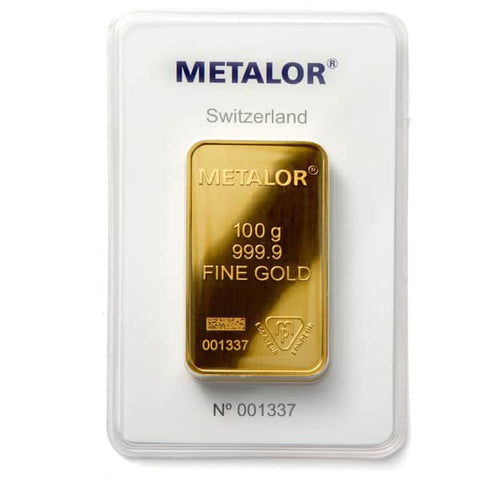
Buy from a reputable source and this rarely becomes an issue, but it is worth knowing what to look at. Bars should arrive sealed in tamper-evident packaging with an assay certificate and a serial number matching the bar. Leave that packaging intact — a sealed bar is easier to resell than an opened one.
Coins have precisely defined weights and dimensions, and gold is dense in a way that is difficult to imitate convincingly. Accurate scales and a set of callipers will confirm a genuine coin quickly.
Common first-time mistakes
- Buying tiny units. Ten one-gram bars cost meaningfully more than a single ten-gram bar for the same metal.
- Ignoring the sell price. The spread matters more than a small difference in headline price.
- Buying commemoratives by accident. Limited-edition packaging carries a premium bullion buyers will not pay back.
- Assuming home insurance covers it. It very often does not, or not to the value you assume.
- Trying to time it. Nobody reliably calls short-term moves in gold. Buying in stages avoids staking everything on one date.
A sensible first purchase
Decide the amount first, and treat it as money you will not need soon. Choose your format — Britannias if the CGT treatment matters to you, a larger bar if efficiency does. Decide delivery or storage before you order. Then check the buy-back price, so you know the full round trip before you commit.
If you would rather talk it through than work it out alone, our team will walk you through options against live prices, with no obligation to buy.
Related products



This guide is general information, not personalised financial, investment, legal, accounting or tax advice. Tax treatment depends on your individual circumstances and may change. Please take independent advice before making a decision.
