
Mon–Fri 9am–7pm



Investment guide
Gold Bars vs Gold Coins
Bars usually give you more gold per pound. Coins give you flexibility, and British legal tender coins carry a tax treatment bars do not. Here is how to weigh the two.


Almost everyone buying physical gold for the first time arrives at the same fork in the road: bars or coins? Both are investment-grade gold. Both are bought and sold on the same underlying metal price. But they behave differently on price, on tax, and on how easily you can sell part of a holding — and those differences matter more than most people expect.
The short answer
Bars generally give you more gold for your money. Coins generally give you more flexibility, and certain British coins carry a tax treatment that bars do not. Which matters more depends on how much you are buying, how long you expect to hold, and whether you are likely to sell in one go or in stages.
Why coins cost more per gram
The gold in a one-ounce coin and the gold in a one-ounce bar is worth the same. What differs is the premium — the amount above the metal value that covers minting, distribution and dealing.
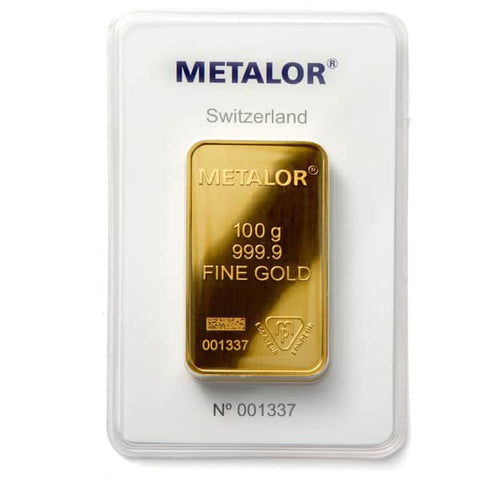
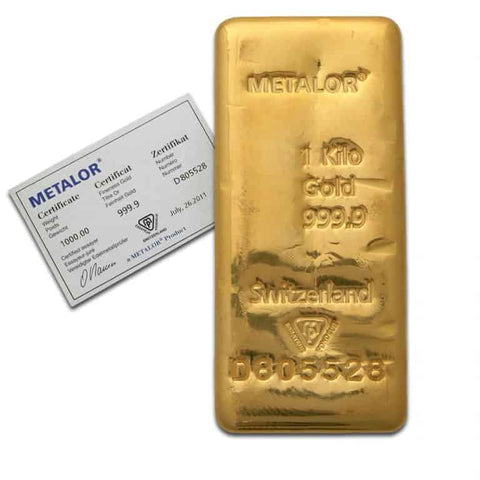
Coins are more intricate to produce than cast bars, so they carry a higher premium. That premium also rises sharply as pieces get smaller: a ten-gram bar costs more per gram than a one-kilo bar, and a quarter-ounce coin costs considerably more per gram than a one-ounce coin. If your only goal is to own the maximum quantity of gold for a given budget, larger bars are usually the most efficient route.
The trade-off is that the premium works in both directions. A coin bought at a higher premium may also sell at a higher premium, particularly if it is widely recognised.
The tax difference, and why it often decides it
In the UK, investment-grade gold is exempt from VAT whether it is a bar or a coin. That part is the same.
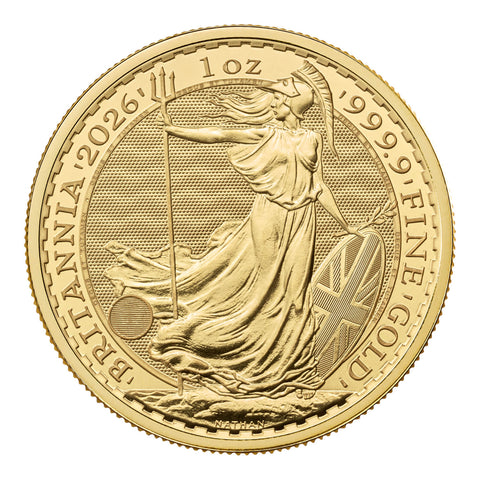
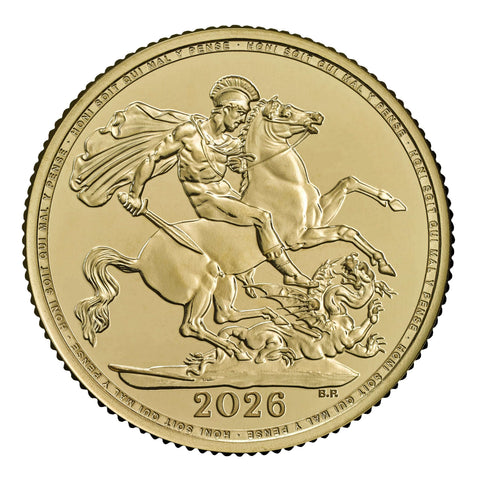
Capital Gains Tax is where they diverge. Gold coins that are UK legal tender — the Britannia and the Sovereign among them — are exempt from CGT for UK residents, because they are legal tender rather than because they are gold. Bars do not have that status, and neither do foreign coins such as the Krugerrand or the Maple Leaf, even though those are VAT-free.
For a modest holding this may never come into play. For a larger holding built over years, it can become the single most significant difference between the two. Tax treatment depends on your own circumstances and the rules change, so it is worth reading our dedicated guide and taking advice before it becomes relevant.
Selling part of a holding
This is the practical point most often overlooked at the buying stage.
If you hold one kilo bar and you need to release a portion of its value, you have to sell the whole bar. If you hold the equivalent in one-ounce coins, you can sell five, or twelve, and leave the rest untouched. The same applies to Sovereigns, which are small enough to release value in fairly fine increments.
Nobody buys gold intending to sell it piecemeal. But circumstances change, and divisibility costs you something at purchase in exchange for options later.
Recognition when you come to sell
A Britannia, a Sovereign, a Krugerrand or a Maple Leaf is recognised by dealers anywhere. Their weight and purity are standardised and well known, which tends to make them straightforward to sell.
Bars are equally saleable when they come from an LBMA-approved refiner and arrive with their assay intact. Keep the packaging sealed — a bar still in its original certified card is simpler to trade than one that has been opened, however genuine it is.
Which tends to suit whom
| Priority | Usually points to |
|---|---|
| Maximum gold per pound spent | Larger bars |
| Freedom from CGT on gains | British legal tender coins |
| Ability to sell in stages | Coins, or a spread of smaller bars |
| Simplicity of storage | Bars, which stack compactly |
| Passing value on in portions | Coins, particularly Sovereigns |
A practical approach
Many long-term holders do not choose one or the other. A common pattern is to hold the bulk of the value in larger bars for efficiency, and a proportion in Britannias or Sovereigns for the tax treatment and the flexibility to sell in parts.
The right balance depends on the size of your holding and your own tax position. If you would like to talk it through against real prices rather than in the abstract, our team is happy to do that — there is no obligation to buy.
Related products
This guide is general information, not personalised financial, investment, legal, accounting or tax advice. Tax treatment depends on your individual circumstances and may change. Please take independent advice before making a decision.
